
Porsche
UX
UX Design
Product
Product Design
UX Consulting
UX Consulting
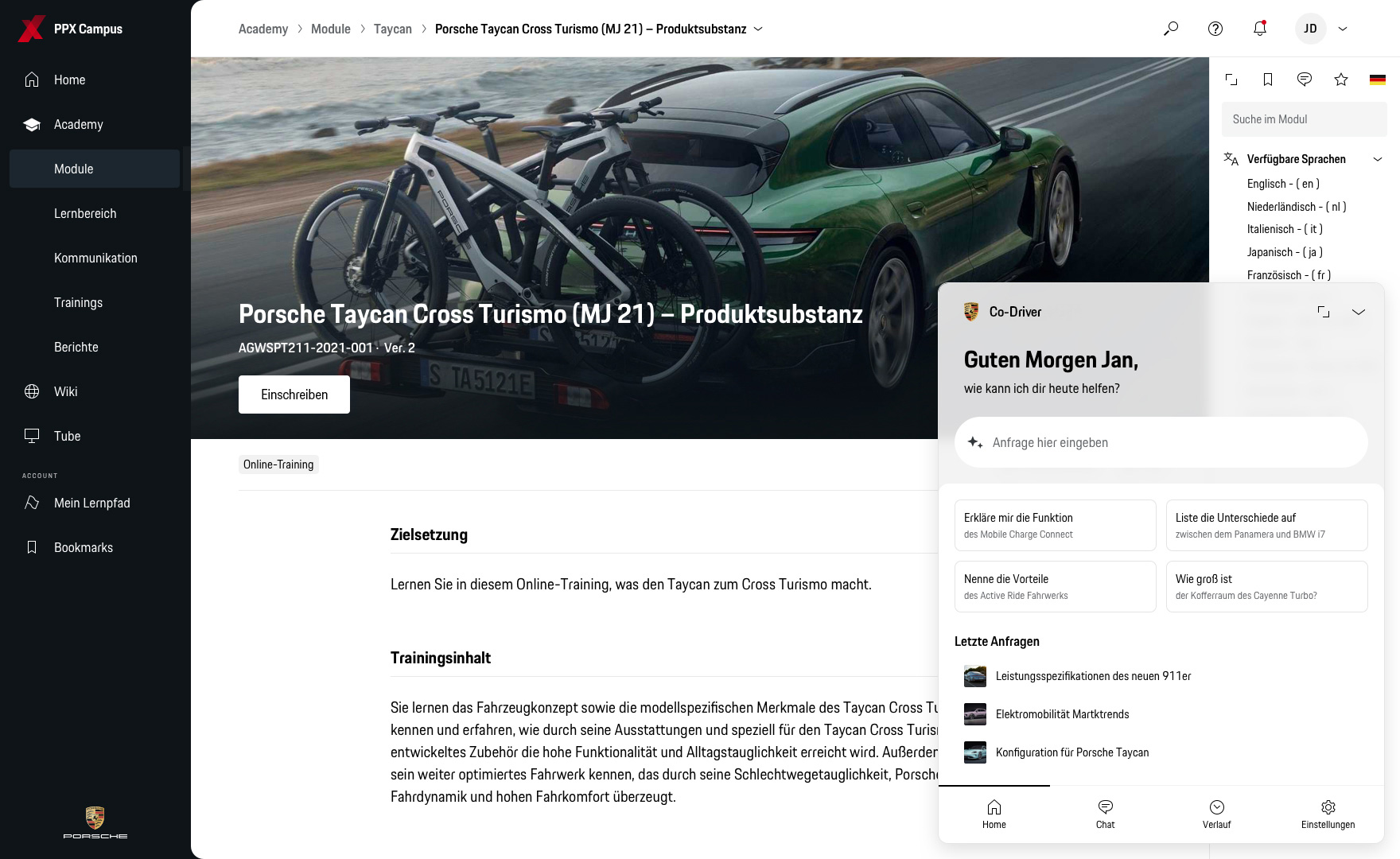
I led the strategic redesign of Porsche's global learning ecosystem, consolidating ten legacy tools into a unified platform for all 34 global markets. By shifting from waterfall to user-centered design, I created a cohesive interface merging video, wiki, and course content with an integrated LLM, which now serves as a blueprint for future Porsche AI products. This overhaul resolved critical usability bottlenecks, increasing user satisfaction from under 50% to over 90% while drastically reducing maintenance overhead.
Year
2022 – 2024
Roles
Lead UX/Product Designer
Contributions
Consulting, UX, Product, Prototyping, Research
Context & Challenge
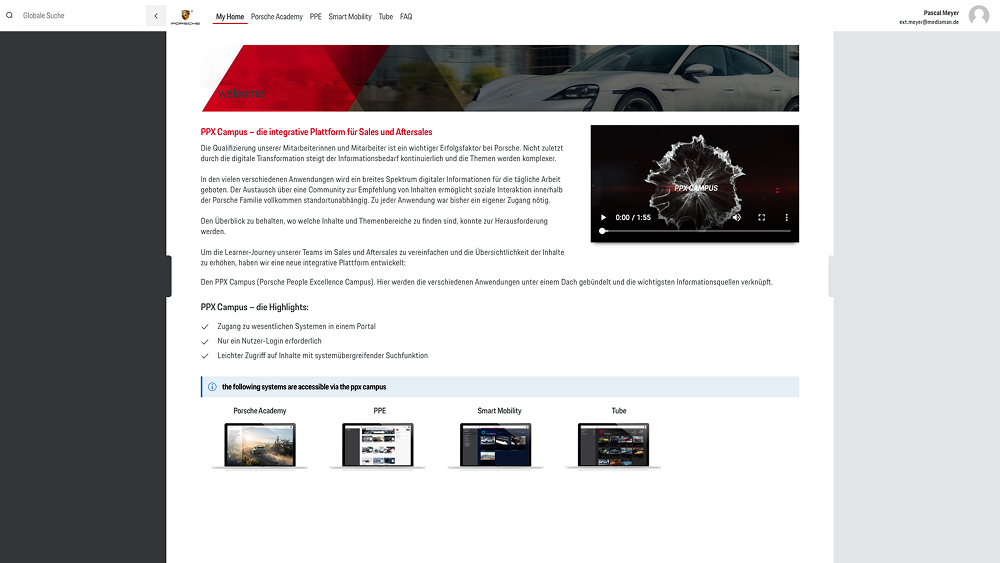
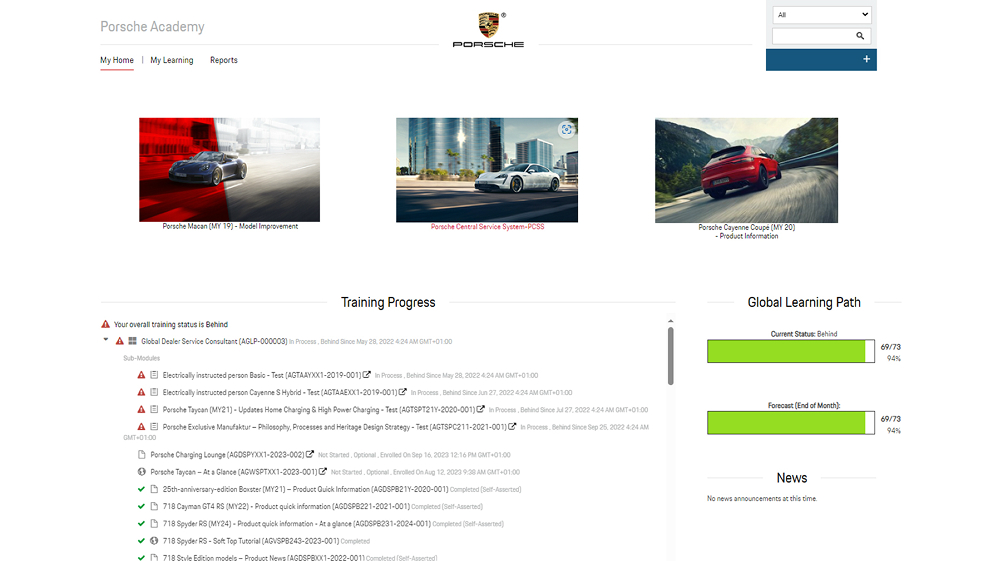
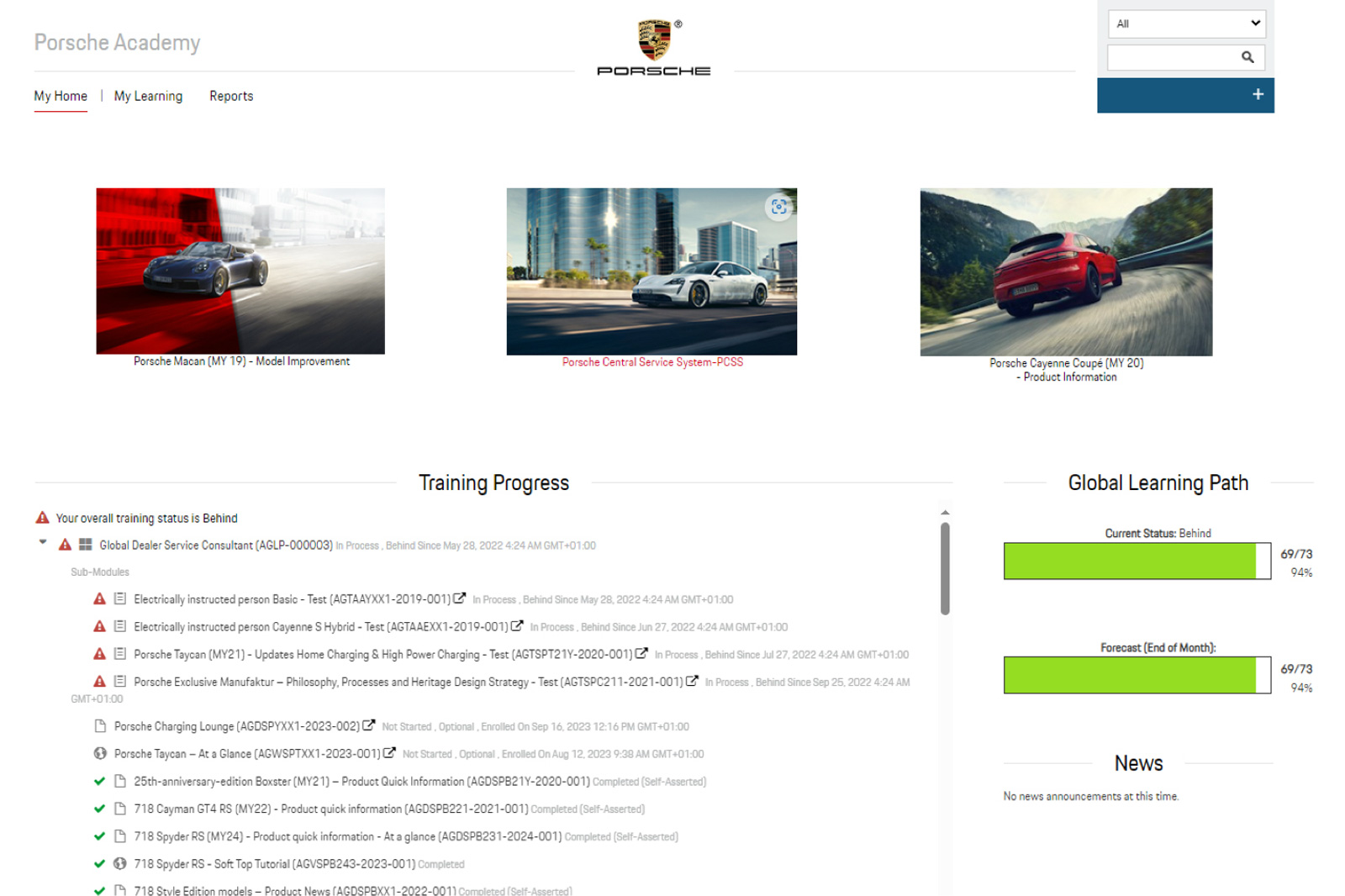
PPX Campus is the single source of truth for Porsche dealership staff worldwide, yet the legacy ecosystem was fundamentally broken. It consisted of ten disconnected platforms—including separate tools for modules, wikis, videos, and communication—that were developed in silos by different agencies. Consequently, there was no consistent UI or UX across the ecosystem.
My challenge was to untangle this accumulated tech debt. The previous waterfall model had resulted in low engagement and satisfaction scores under 50%, with usage driven purely by compliance rather than curiosity. I was tasked with consolidating these fragmented tools into a singular, intuitive platform serving the entire global network of 34 markets.
My Role
My mandate extended beyond execution because I acted as a user centricity consultant. One of the root causes of multiple problems was the exclusion of users from the development process. I developed a user centricity concept to bridge the gap between multiple stakeholders at Porsche and development, which was executed through external agencies.
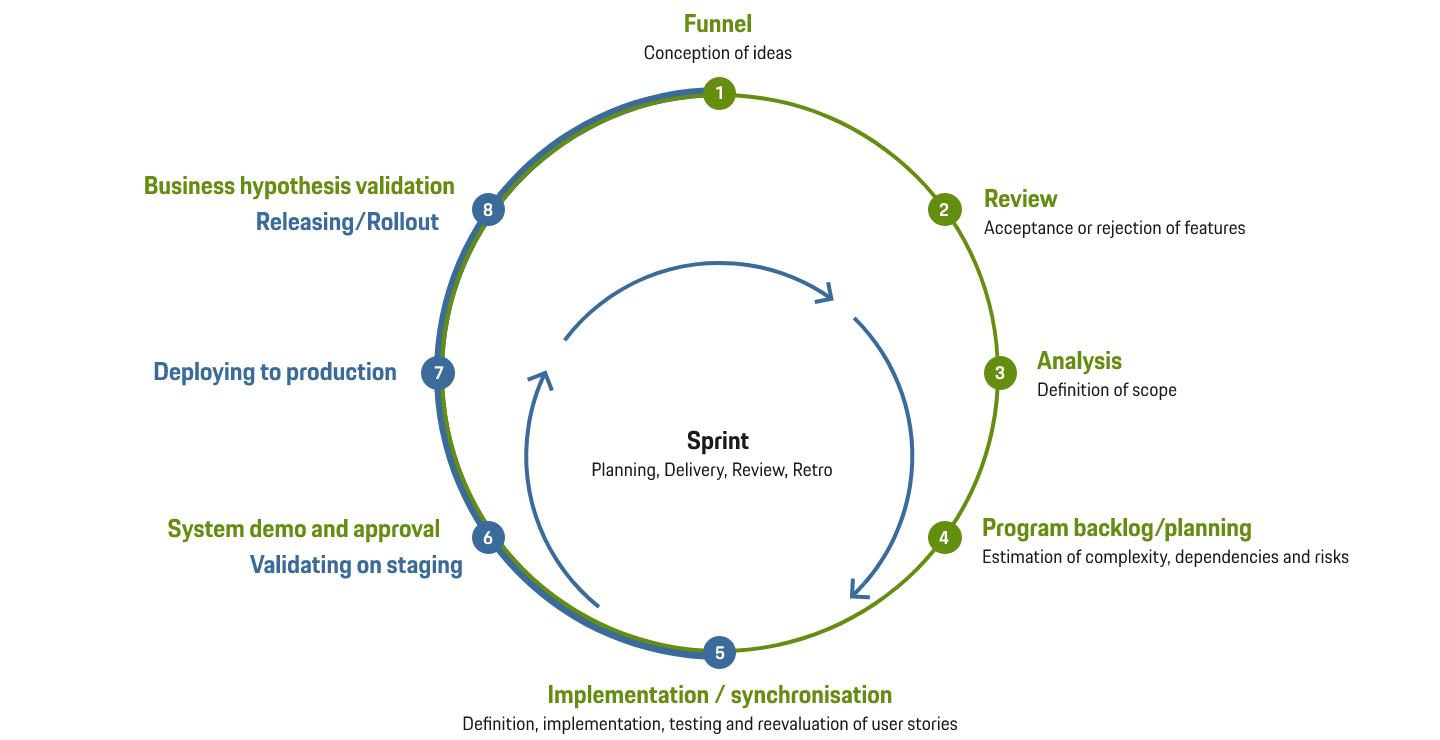
Old Waterfall process
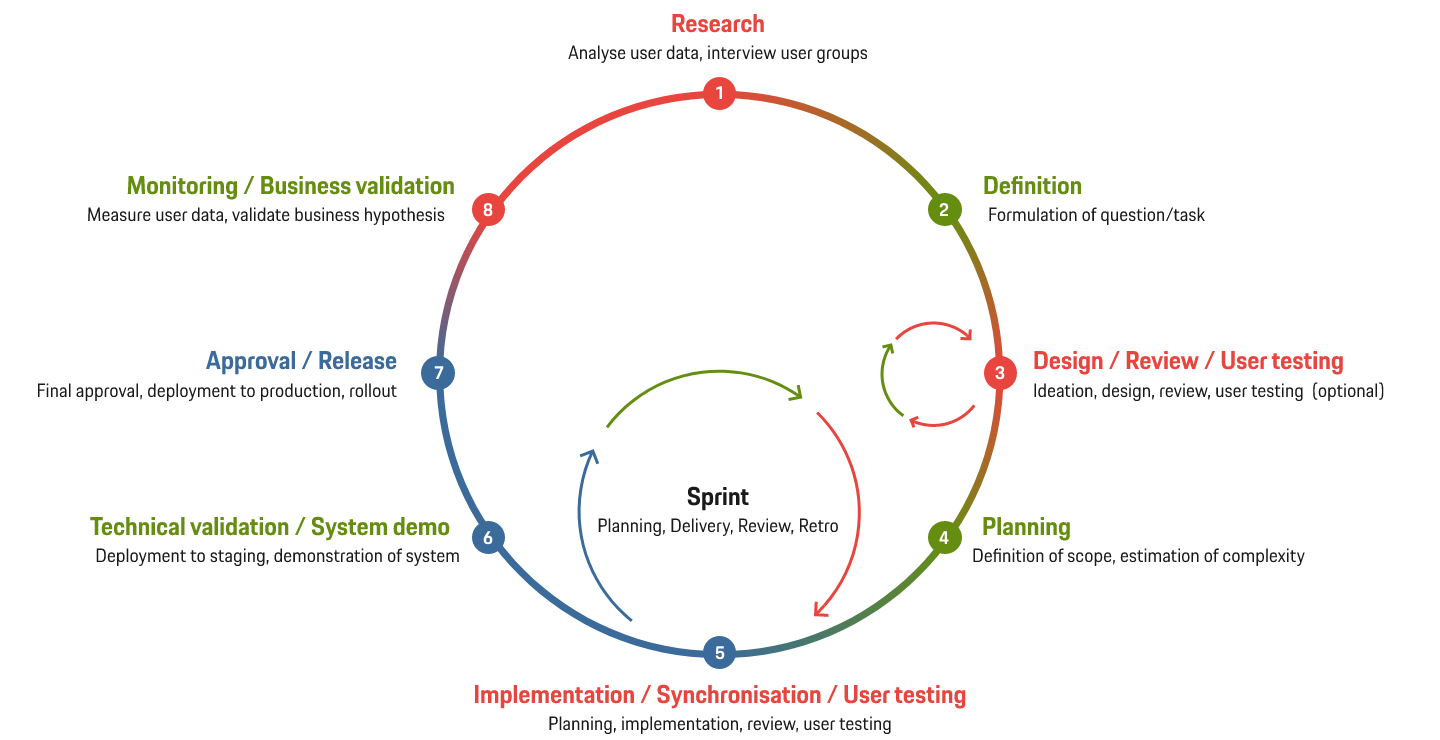
New user-centered process
Research
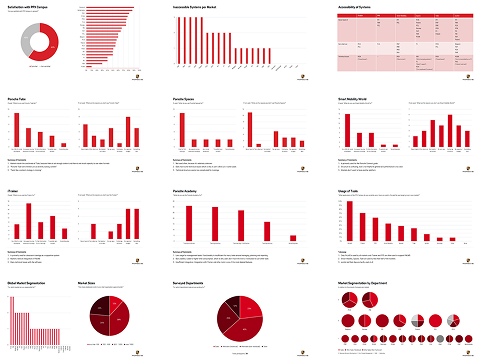
The new process consisted of a multi-layered UX research strategy to validate user needs. I conducted a user survey in all 34 markets worldwide using Qualtrics, and it revealed that platform structure, not content, was the main barrier. Subsequently, I set up the user analytics tool FullStory, through which I saw in heatmaps that critical features were invisible due to poor layout.
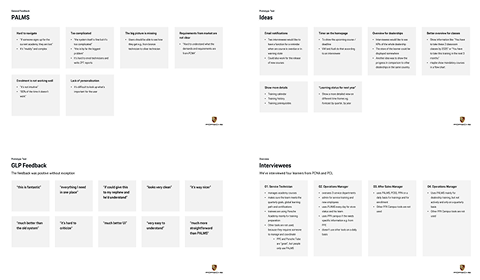
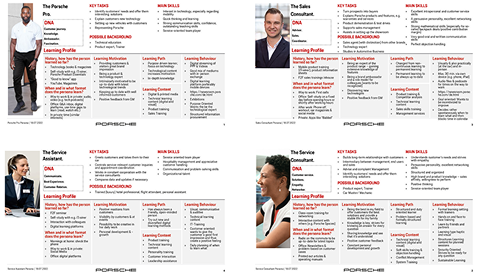
Porsche provided five user personas: The "Porsche Pro," the Sales Consultant, the Service Consultant, the Service Assistant, and the Training Manager. These helped to organize qualitative user research in the form of interviews. We decided to focus on four core markets (US, China, Germany, EU ex-Germany) and, together with the PM, I interviewed users from each group.

Insights
"There are too many sub-platforms that are not connected"
"The IT structure is too complicated."
"We don't want to promote tools until they're curated and integrated."
"We don't know where we can find which information."
"Feels like a content strategy is missing."
Process
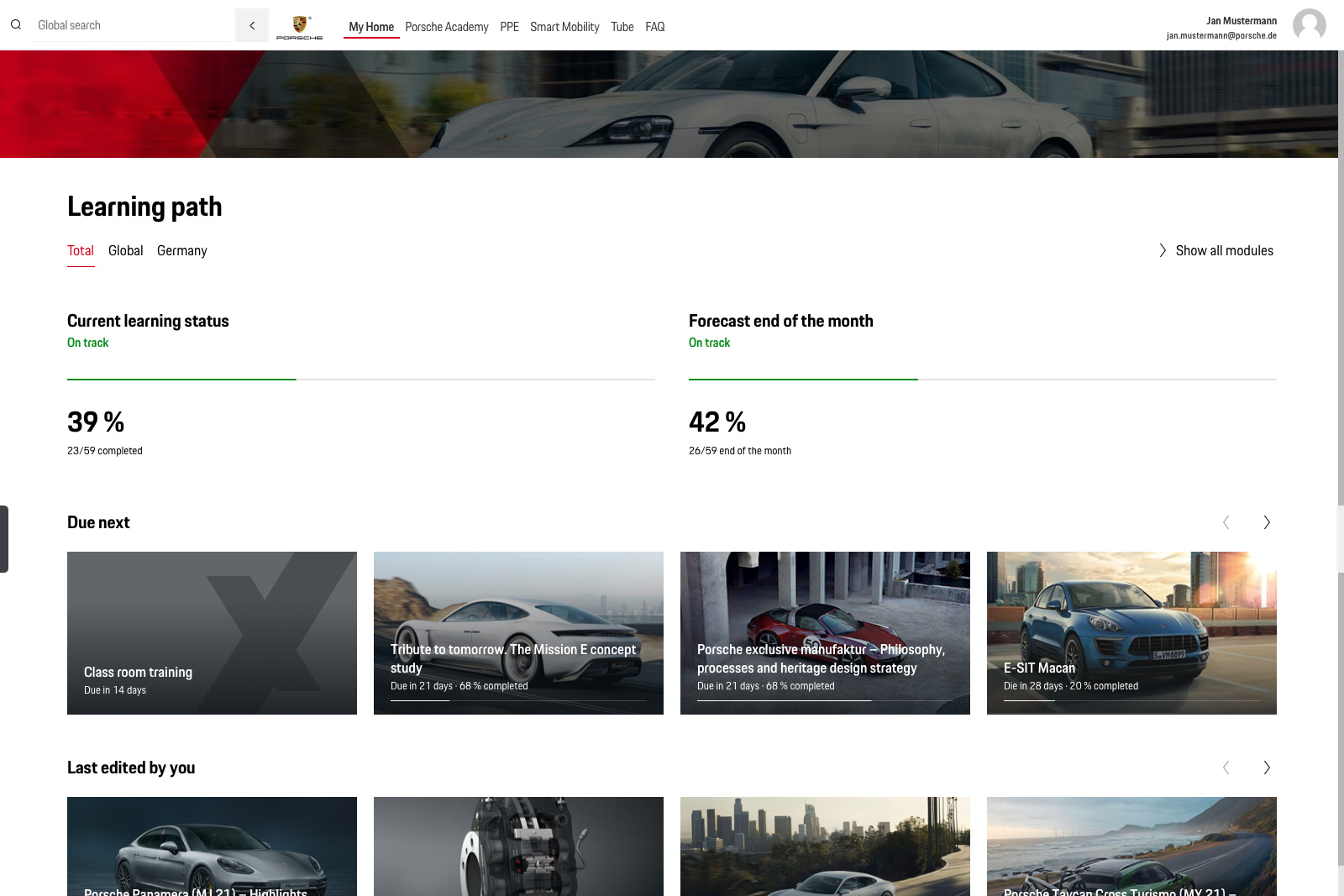
We structured the project as a phased rollout to ensure continuous user feedback throughout the entire development lifecycle. The first phase focused on deploying the Global Learning Path as our MVP, which allowed us to validate the new logic immediately with real users. Building on those insights, we moved to consolidating the global navigation and sidebars to visually unify the ten disparate tools into one framework. With the structural skeleton in place, the next phase involved a complete redesign of the core content pillars like the Academy and Wiki to match the new Porsche Design System v3.

Solution
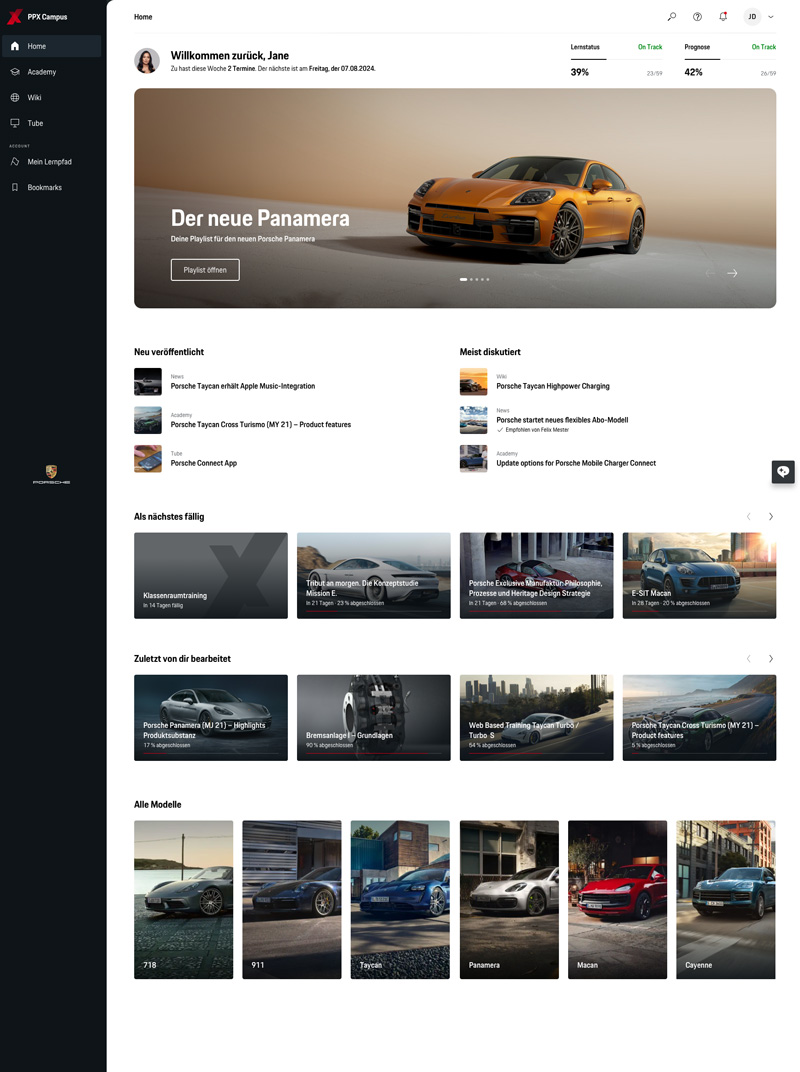
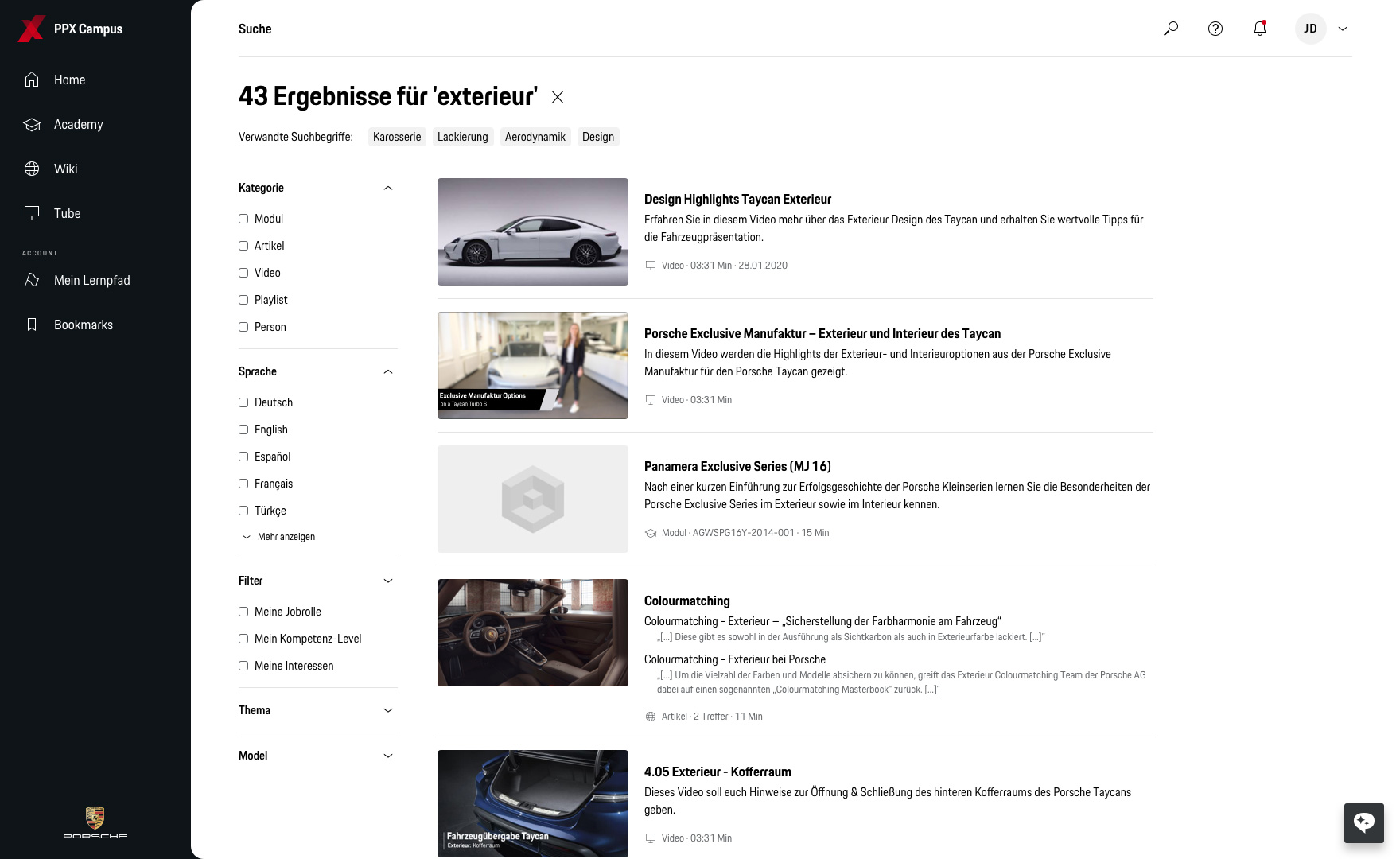
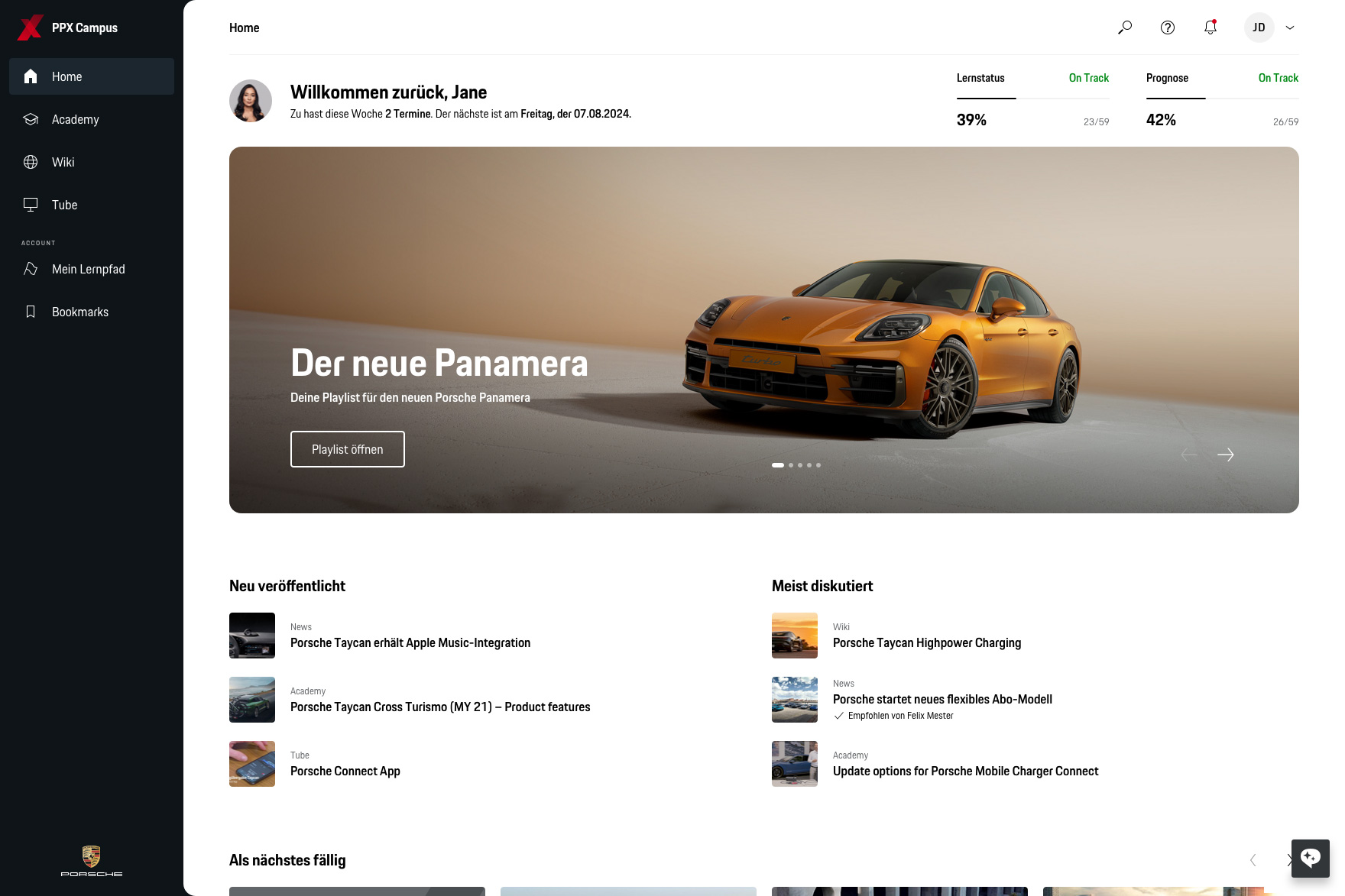
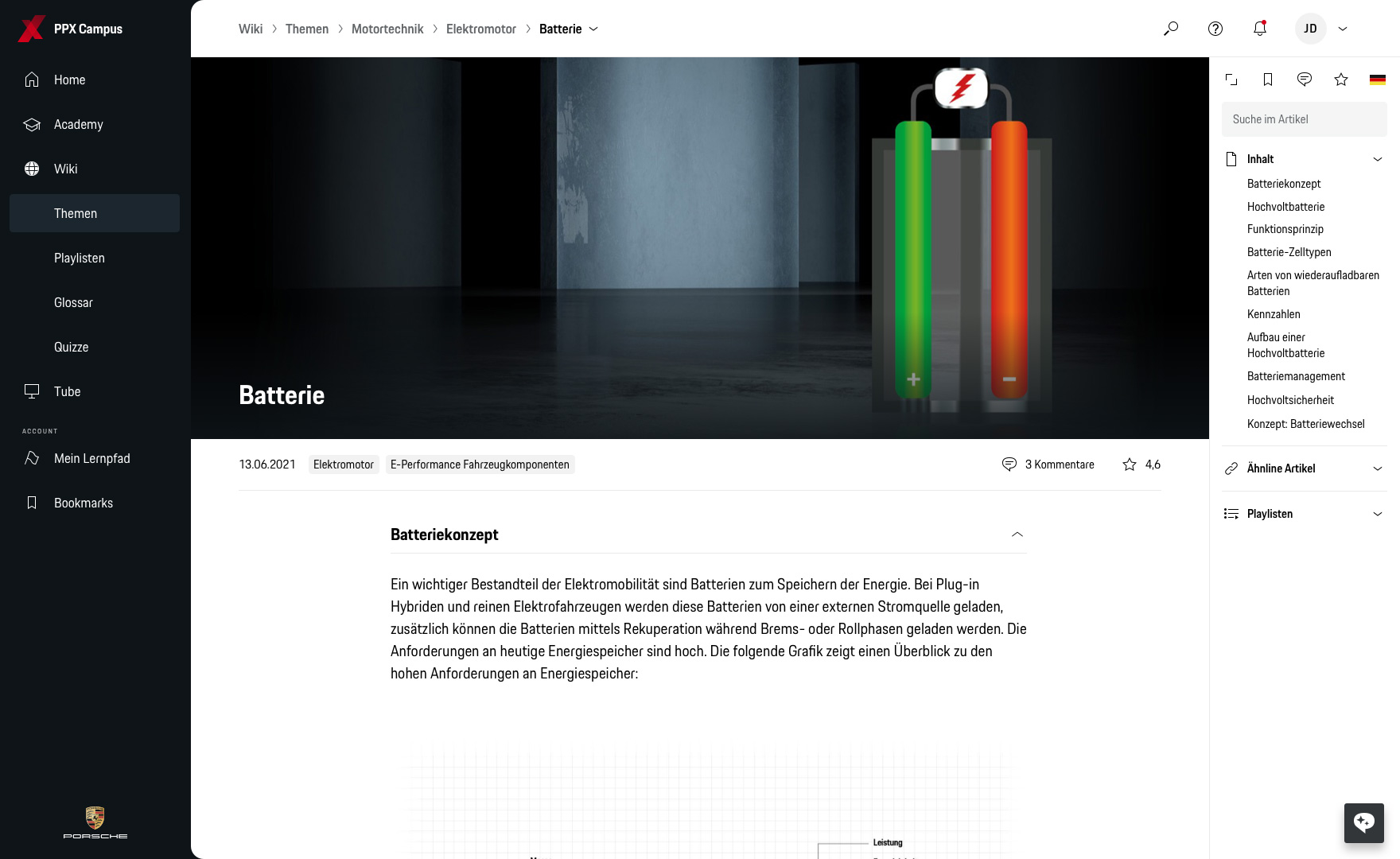
I consolidated the ten fragmented legacy tools into a single unified platform that centralizes the Learning Path, Academy, Wiki, Tube, and more. We shifted the architecture from platform-based silos to a category-driven model where content is organized by format rather than legacy tool names. For instance, mixed-media topics like Smart Mobility were dissolved so that all video content was bundled under Porsche Tube while text-based articles moved to the Wiki.
To improve relevance, I designed a personalized dashboard that features global progress tracking for immediate visual status updates. We also fostered organic engagement through an integrated community by surfacing active discussions directly on the main interface.
AI Integration
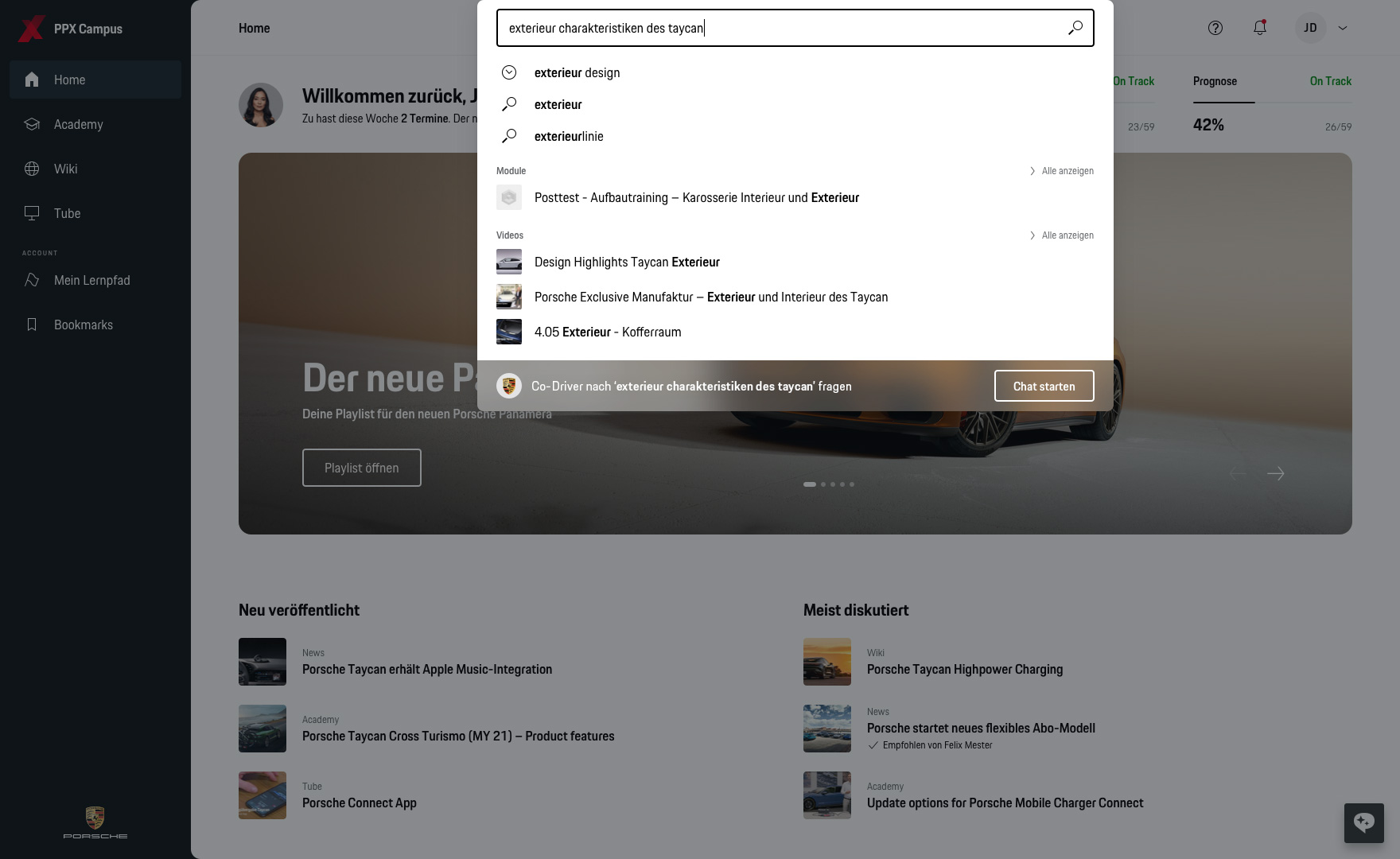
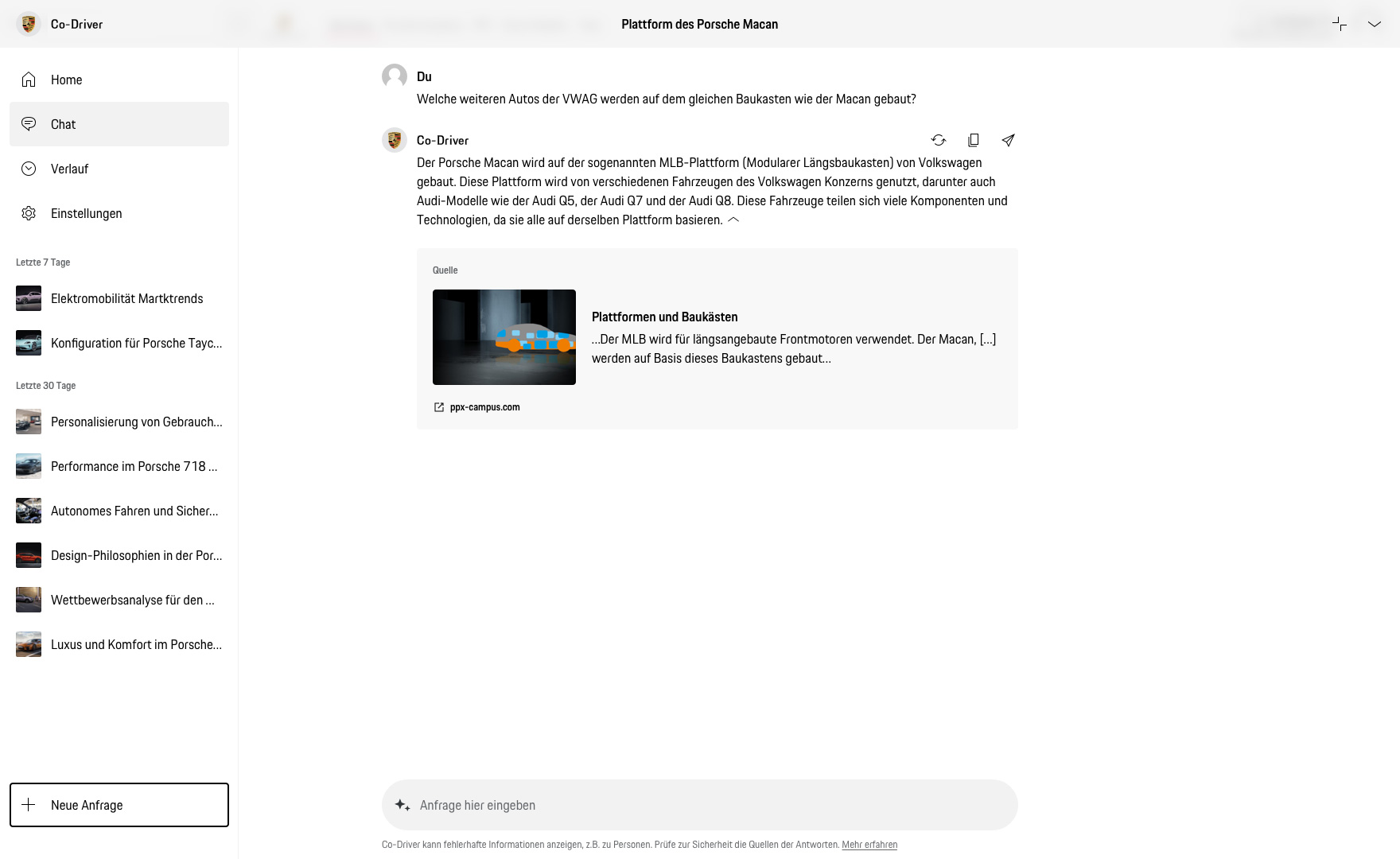
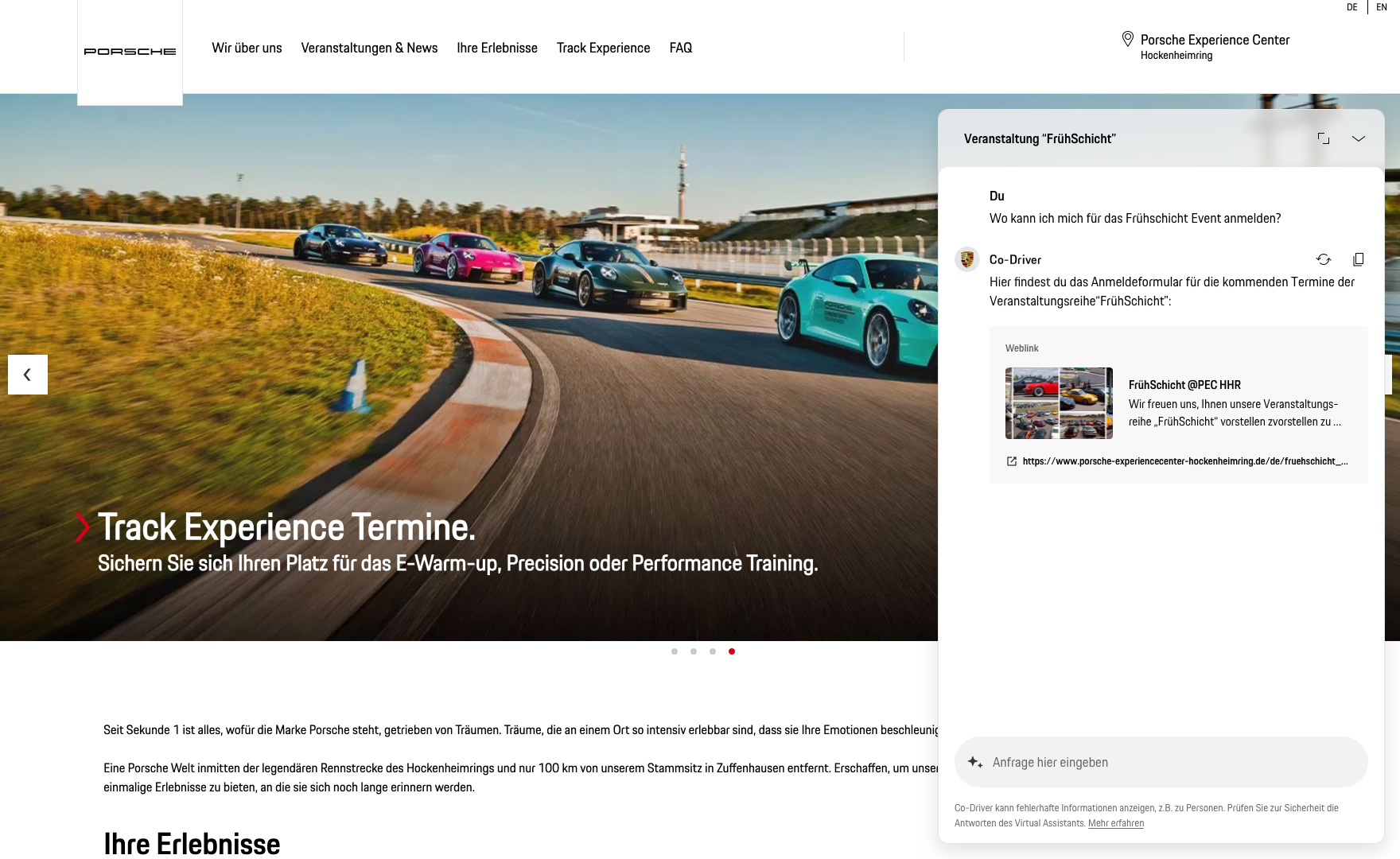
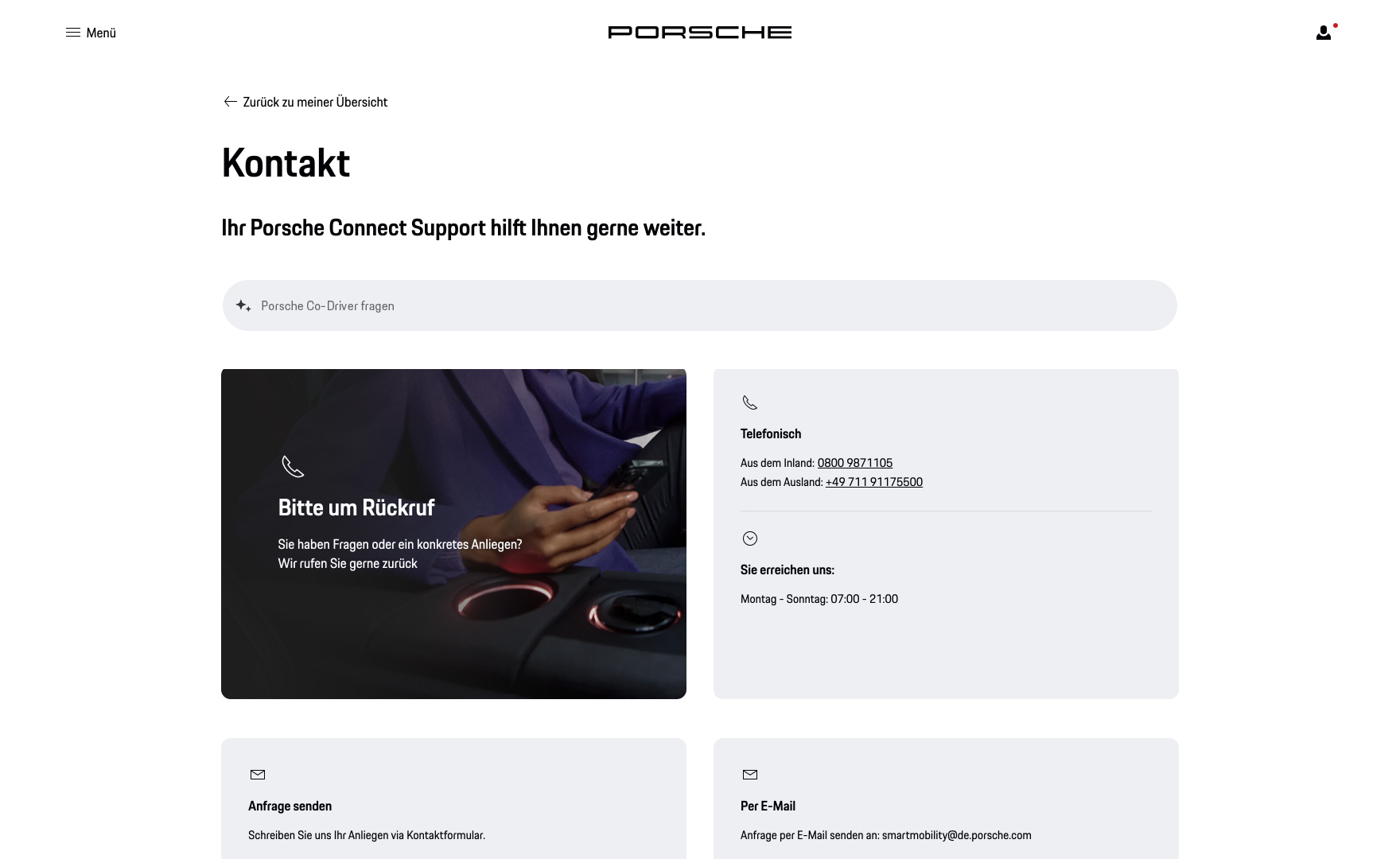
During the process, we identified the rise of conversational AI as a potential solution to streamline learning and customer support. In a first prototype, I designed the "Porsche Co-Driver" as an integrated conversational UI that unifies the underlying platforms into a single access point. This solution was successfully pitched to corporate management and further developed in a second project.
The Co-Driver functions as an intelligent search engine, allowing users to query the knowledge base for instant support or educational context. This successful integration served as the blueprint for Porsche's future AI products, including after-sales customer service and direct end-customer solutions.
Validation
We validated our designs through rigorous testing with learners and Training Managers. Feedback was overwhelmingly positive, with users describing the new interface as fantastic and straightforward. Testing confirmed that the new global search drastically reduced time-to-content and the logic of the Global Learning Path was immediately understood. As one user noted, "If I could give this to my nephew he'd understand it," confirming we achieved our goal of intuitive simplicity.
"This is fantastic"
"Everything I need in one place"
"Much better than the old system"
"It's hard to criticize"
"I could give this to my nephew and he'd understand"
"Much better UI"
"It's way nicer"
"Looks very clean"
"Very easy to understand"
"Much more straightforward than PALMS"
Results
The redesign transformed a mandatory compliance tool into a platform users want to use. Post-launch, user satisfaction scores skyrocketed from under 50% to over 90%. Merging fragmented platforms significantly reduced technical maintenance and operational overhead. Crucially, the AI Co-Driver has measurably improved advisory speed, proving that a user-centered design approach delivers tangible global business value.
> 90%
User Satisfaction
Compared to <50% before
100%
Task Completion
During usability testing
11
Systems Unified
Into one global experience
11
Systems Unified
Into one global experience
You've reached the end. Thanks for watching!
Say hi!
hi@pascalmey.comPascal Meyer GmbH
HRB 213189
DE359124851
CHE-231.531.352
🇨🇭 Switzerland
Gerbestrasse 17
8805 Richterswil
+41 78 252 7919
🇩🇪 Germany
Mohnblumenweg 26
28832 Achim
+49 176 747 1337 8
© Copyright 2026. All Rights reserved.
Imprint